The New Drought-Proofing Playbook: Inside Australia’s $14 Million Bet on Long-Term Cropping Science
Why One of the World’s Longest Cropping Trials Just Got a Major Upgrade
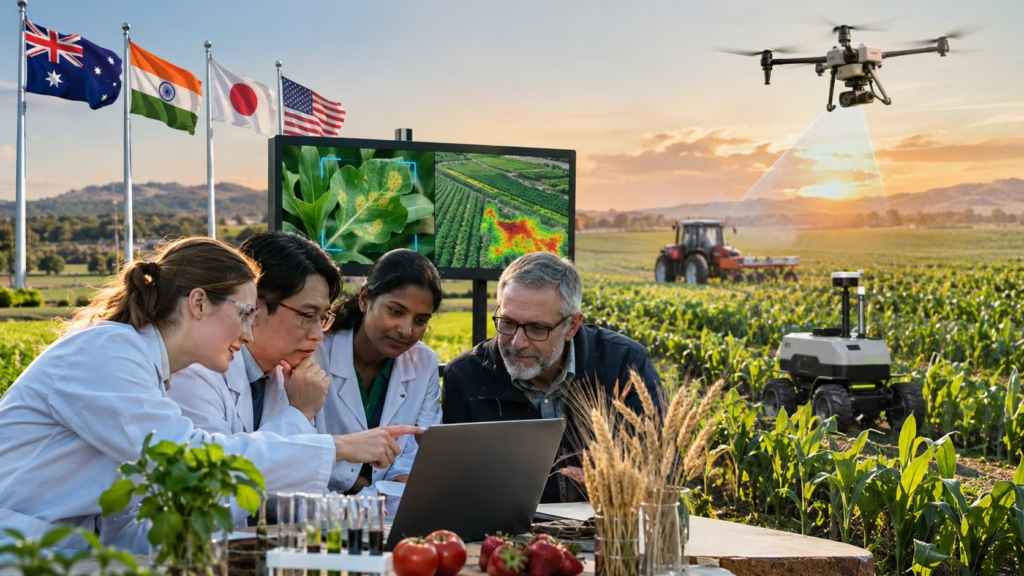
Australia’s battle against drought is no longer fought with dams and prayers alone. In September 2026, a $14 million research partnership commenced, led by the NSW Department of Primary Industries and Regional Development (DPIRD) and backed by almost $8 million from the Australian Government’s Future Drought Fund . The project, Long-term Drought Resilient Practices for Climate-Smart Cropping Systems, is not a short-term fix. It expands cropping trials that have run for up to 40 years at the Australian Cotton Research Institute near Narrabri, while establishing a network of 25 on-farm trials across NSW, Queensland, and the Northern Territory .
Beyond Yield: What the Trials Actually Measure
The research evaluates soil amendments, moisture-conserving rotations, and novel plant growth regulators under irrigated, semi-irrigated, and dryland systems . But the technological backbone is what sets this program apart. Crop sensors, soil moisture probes, and remote sensing are being deployed to build improved irrigation decision-support frameworks that guide farmers before, during, and after drought . Researchers are also examining key climate drivers in the northern Murray–Darling Basin to inform crop choice and planting decisions .
A Real-World Test Case: Cotton as the Canary
The project focuses on cotton systems but delivers broader benefits to grains and pulses. This matters because cotton is notoriously water-intensive, and the northern Murray–Darling Basin has faced repeated severe droughts. By combining decades of historical trial data with real-time sensor networks, the program aims to give growers something they have never had: evidence-based confidence about which practices actually preserve soil moisture and profitability when rainfall fails.
Minister for Agriculture Julie Collins framed the investment explicitly around food security, stating the project would “help safeguard our food security and our trusted position in the global trade market” . The research partners include CSIRO, five universities, and CottonInfo as the lead extension partner — a signal that the findings are designed to move from paddock to policy .
The Data Point That Matters
The 25 on-farm trials are the program’s most pragmatic feature. Controlled trial plots often fail to replicate real farm variability. By testing practices across diverse soil types and rainfall zones, the researchers are effectively stress-testing their recommendations before they reach the wider industry. For a sector where a single failed season can wipe out years of margin, that validation is as valuable as the technology itself.