Malaysia’s RM15 Billion Solar Bet: How LSS6 and CRESS Are Rewriting the Investment Playbook
The New Architecture of Malaysian Renewable Energy Investment
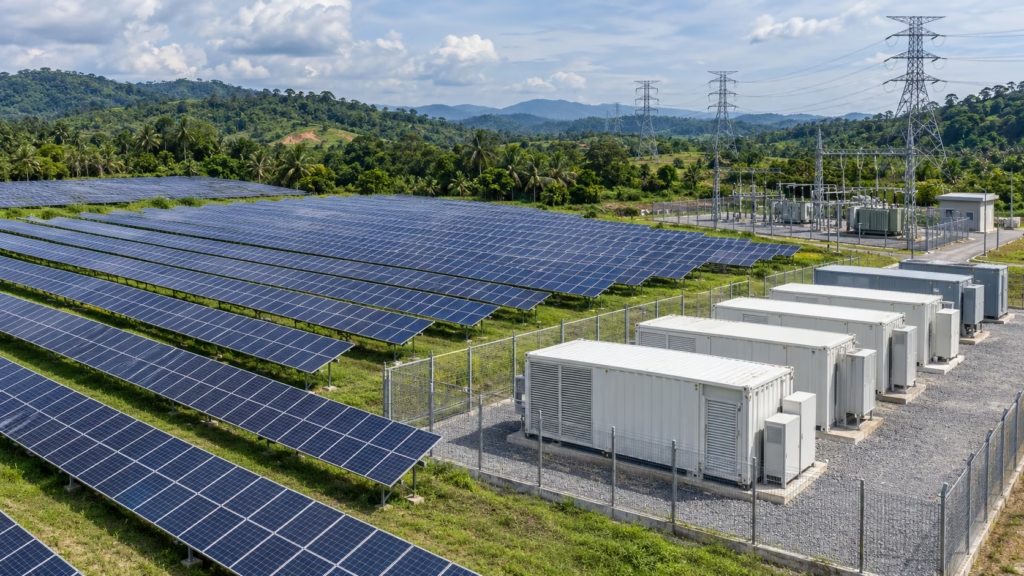
Malaysia has moved decisively from policy ambition to execution. The launch of the sixth Large-Scale Solar (LSS6) programme in July 2026 marks a structural shift in how renewable energy projects are financed, built, and connected to the grid. With 2,500 MW of solar capacity paired with 1,250 MW of battery energy storage, LSS6 is not merely an auction round—it is an industrial policy instrument designed to crowd in private capital at a scale the country has not previously attempted.
The numbers are striking. LSS6 is projected to attract between RM13 billion and RM15 billion in private investment and create 15,000 to 20,000 jobs during construction and development. Unlike earlier rounds, the programme integrates storage from the outset, recognising that solar without firming capacity cannot credibly replace retiring coal plants.
Bumiputera Participation as a Market Signal
A distinctive feature of LSS6 is the reserved allocation for Bumiputera companies: 450 MW of the total solar capacity is carved out across dedicated packages. This is not tokenism. Package 2 offers 300 MW of solar with 150 MW of battery storage exclusively to Bumiputera developers, while Package 3 provides 150 MW for smaller Bumiputera firms without a storage requirement. The design lowers entry barriers for domestic firms that have historically struggled to compete with large international developers, while maintaining technical standards.
The CRESS Framework and Corporate Offtake
Parallel to LSS6, the Corporate Renewable Energy Supply Scheme (CRESS) has become the primary vehicle for corporate procurement. In November 2026, IOI Corporation partnered with Tenaga Nasional Berhad to develop a 500 MWac solar project with a 250 MW/1,000 MWh battery system in Negeri Sembilan, backed by a 21-year offtake agreement with DayOne Data Centres. The project illustrates how CRESS enables direct contractual links between renewable generators and large electricity consumers, bypassing the traditional utility-centric model.
The policy ecosystem is also maturing. The PETRA Strategic Plan 2026–2030, launched in June 2026, contains 119 programmes and 133 measurable targets focused on grid upgrades, digitalisation, and demand-side management. TNB is investing RM43 billion from 2023 to 2027 to strengthen the grid, including AI-enabled integration. For investors, the message is clear: Malaysia is building the institutional and physical infrastructure required to absorb large volumes of intermittent renewable power.
What the Data Says About Execution Risk
Malaysia’s renewable installed capacity reached nearly 32 per cent by mid-2026, up from 31 per cent at the end of 2025, keeping the country on track for its 35 per cent target by 2030 and 70 per cent by 2050. The critical test ahead is not target-setting but delivery—whether LSS6 projects reach commercial operation by their December 2029 deadline. Grid connection queues, land acquisition, and supply-chain bottlenecks remain real constraints. The investment case for Malaysian renewables is no longer about policy uncertainty; it is about execution capability.